
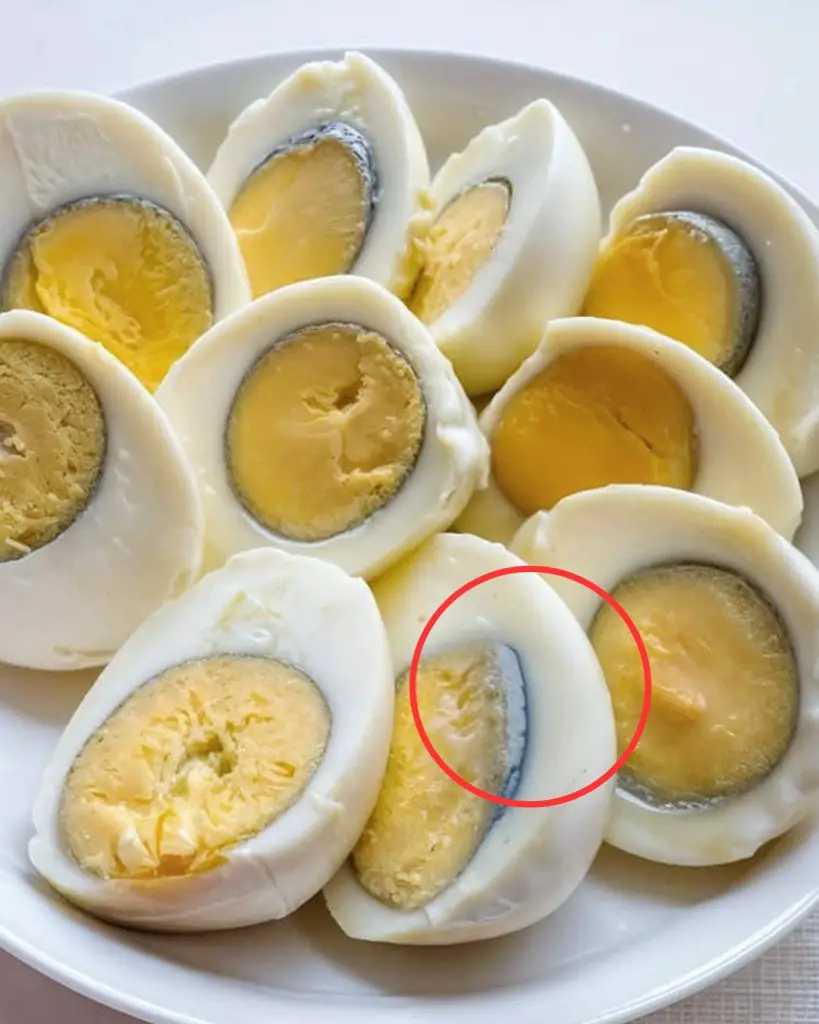
You crack open a hard-boiled egg expecting a bright yellow yolk, only to find a dull gray-green ring circling the outside. It looks unappetizing and raises immediate questions: Is it spoiled? Did I do something wrong? Is it safe to eat?
The short answer is reassuring: the green ring is harmless. It’s a common cooking issue, not a food safety problem. Still, understanding why it happens can help you avoid it and make perfect hard-boiled eggs every time.
The Science Behind the Green Ring
The green or gray ring is the result of a chemical reaction between sulfur and iron, both of which naturally occur in eggs.
Here’s what happens step by step:
- Egg whites contain sulfur-rich proteins
- Egg yolks are rich in iron
- When eggs are cooked too long or at too high a temperature, sulfur in the whites breaks down into hydrogen sulfide gas
- That gas migrates toward the yolk and reacts with the iron
- The reaction creates ferrous sulfide, a greenish-gray compound
This reaction occurs right where the white meets the yolk, which is why the discoloration forms a thin ring rather than turning the entire yolk green.
Why Overcooking Triggers It
The green ring forms when eggs are exposed to excessive heat for too long. Common causes include:
- Boiling eggs aggressively instead of gently
- Leaving eggs in boiling water too long
- Letting eggs cool slowly in hot water instead of stopping the cooking process
The longer the egg stays hot, the more hydrogen sulfide gas forms—and the more pronounced the green ring becomes.
Is an Egg With a Green Ring Safe to Eat?
Yes. Completely safe.
The green ring:
- Is not mold
- Is not bacteria
- Is not a sign of spoilage
However, eggs with a green ring often have:
- A dry or chalky yolk
- A slightly sulfur-like smell
- A less pleasant texture
So while they won’t harm you, they’re usually less enjoyable to eat.
What the Green Ring Does Not Mean
There are several misconceptions about the green ring. Let’s clear them up:
- ❌ It does not mean the egg is old
- ❌ It does not mean the egg was low quality
- ❌ It does not indicate food poisoning
- ❌ It is not caused by refrigeration or storage
The green ring is caused only by overcooking—nothing else.
How to Prevent the Green Ring Every Time
Perfect hard-boiled eggs depend on gentle heat and precise timing.
Foolproof Hard-Boiled Egg Method
- Place eggs in a single layer in a saucepan
- Cover with cold water, about 1 inch above the eggs
- Bring to a gentle boil over medium heat
- Once boiling, turn off the heat and cover the pot
- Let eggs sit in hot water:
- 9 minutes for fully set but creamy yolks
- 10 minutes for firmer yolks
- Immediately transfer eggs to an ice bath for 5–10 minutes
The ice bath is critical—it stops the cooking instantly and prevents the sulfur-iron reaction from continuing.
Additional Tips for Better Hard-Boiled Eggs
- Use older eggs if you want easier peeling (fresh eggs stick more)
- Avoid rapid boiling; steady heat works best
- Peel eggs under running water for cleaner results
- Store peeled eggs in the refrigerator and eat within 2–3 days
Why the Green Ring Became So Common
Modern cooking habits play a role. Many people:
- Boil eggs vigorously
- Leave them unattended
- Skip the ice bath altogether
Older cooking methods emphasized gentler heat and faster cooling, which naturally reduced the chance of discoloration.
The Bottom Line
The green ring around hard-boiled eggs may look strange, but it’s simply a visual sign of overcooking.
It’s:
- ✔ Harmless
- ✔ Common
- ✔ Easy to prevent
With better timing, gentler heat, and an ice bath, you’ll get bright yellow yolks, tender whites, and better flavor every time.
Perfect hard-boiled eggs aren’t about luck—they’re about understanding the science and respecting the clock.



Leave a Reply