
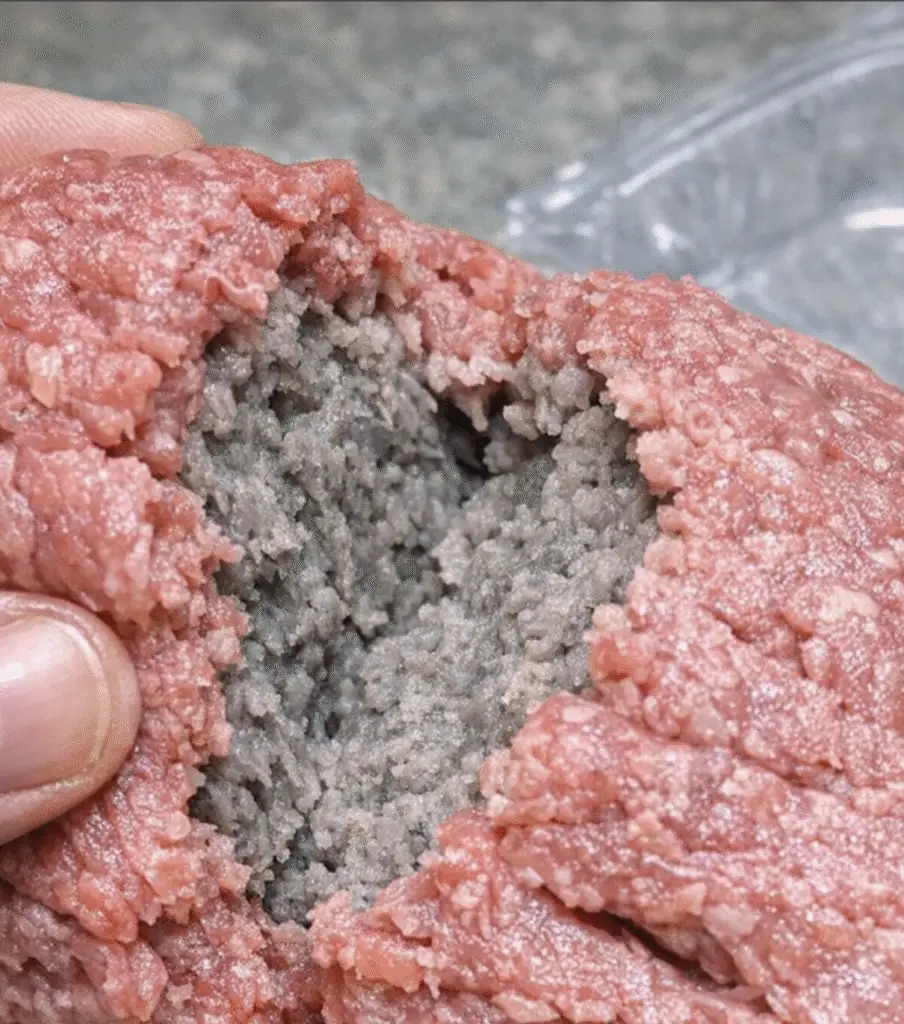
You bring home a package of ground beef that looks bright red and fresh in the store. Later, when you open it to cook dinner, you break it apart and discover the inside is dull grey or brown. Instantly, your stomach drops. Did the store sell you old meat? Is it spoiled? Is it even safe to eat?
Before assuming the worst, take a breath. Grey ground beef is very common — and in many cases, completely normal. The color change usually has more to do with chemistry than quality. However, there are situations when grey meat can signal a real problem.
Let’s break down what’s happening, how to tell if your beef is safe, and what actually indicates spoilage.
1. Why Fresh Ground Beef Turns Grey Inside
Ground beef changes color primarily because of oxygen exposure and a protein called myoglobin.
When meat is freshly cut or ground, it reacts with oxygen in the air. That reaction forms a bright red pigment called oxymyoglobin, which gives beef its appealing cherry-red color.
However, the inside of a tightly packed package of ground beef doesn’t get much oxygen exposure. Without oxygen, the myoglobin remains in a reduced state, which appears:
- Grey
- Brownish
- Dull red
This internal color difference is normal. It does not automatically mean the meat is old or spoiled.
In fact, many packages will appear bright red on the outside and grey in the middle simply because only the outer layer has been exposed to air.
2. The Science Behind Meat Color: Oxygen and Myoglobin
Understanding the science makes the situation much less alarming.
Myoglobin is the protein responsible for storing oxygen in muscle tissue. It can exist in three main states:
- Deoxymyoglobin – Purple-red (low oxygen)
- Oxymyoglobin – Bright red (oxygen exposed)
- Metmyoglobin – Brown/grey (oxidized)
Inside a sealed package, oxygen is limited. As a result, the interior meat can convert to metmyoglobin, giving it a greyish appearance.
This change is purely chemical — not bacterial.
Many grocery stores also use modified atmosphere packaging, which pumps oxygen or carbon monoxide into packages to maintain a bright red surface color longer. That can make the outside look extremely fresh even if the interior has less oxygen exposure.
Color alone does not equal freshness.
3. When Grey Ground Beef Is Perfectly Safe
Grey ground beef is typically safe if:
- It smells fresh (neutral, slightly metallic scent)
- It feels firm, not slimy
- It has been refrigerated properly
- It is within 1–2 days of purchase
According to USDA guidelines, raw ground beef should be cooked or frozen within two days of purchase when stored at 40°F (4°C) or below.
If the only issue is interior greyness and there are no other warning signs, it is usually safe to cook.
Once exposed to air, grey portions often turn red again within minutes. That’s another sign the color change was oxygen-related.
4. Red Outside, Grey Inside — Is This a Scam?
It’s easy to feel suspicious when the meat looks different once opened. However, this is not typically a scam.
The red outer layer forms naturally when exposed to oxygen in the display case. The inner meat remains shielded from air, so it stays grey.
Stores are not trying to trick customers — they are working with how meat chemistry behaves.
That said, if the package was mishandled, stored improperly, or close to its expiration date, other spoilage signs may appear. Always evaluate more than color.
5. What Actually Signals Spoilage?
Color is not the most reliable indicator of bad meat. Instead, focus on:
1. Smell
Spoiled beef smells:
- Sour
- Rotten
- Sulfur-like
- Strongly unpleasant
Fresh beef has a very mild odor.
2. Texture
Spoiled ground beef feels:
- Slimy
- Sticky
- Tacky
Fresh beef should feel slightly moist but not slippery.
3. Packaging
Avoid beef if:
- The package is swollen
- There is excessive liquid
- The seal is broken
- The meat has been left unrefrigerated
If you notice any of these signs, discard the meat.
When in doubt, throw it out.
6. How Long Ground Beef Is Safe in the Refrigerator
Ground beef has a shorter shelf life than whole cuts because bacteria can spread throughout the meat during grinding.
USDA guidelines recommend:
- Refrigerator: 1–2 days
- Freezer: 3–4 months for best quality
If the meat has been in your refrigerator longer than two days, it’s safest to discard or cook immediately.
Always store ground beef in the coldest part of the fridge — not in the door.
7. How to Check Ground Beef at the Store
To reduce surprises at home, inspect packages carefully before buying.
Look for:
- Cold temperature
- Tight, undamaged packaging
- Minimal excess liquid
- Sell-by date as far out as possible
Some color variation is normal. Slight browning does not automatically mean the meat is bad.
Avoid packages that are leaking or feel warm.
8. Understanding Sell-By Dates
A sell-by date is for the store — not necessarily a safety expiration date.
It tells retailers how long to display the product. The meat can still be safe shortly after that date if stored properly.
However, because ground beef is highly perishable, it’s best to use or freeze it by the sell-by date.
Never rely solely on color or date. Always check smell and texture.
9. When Grey Beef Is Actually a Red Flag
Grey meat should be discarded if:
- It smells sour or foul
- It feels slimy
- It has greenish tint
- It has mold spots
- The package is puffed or leaking
- It was left out at room temperature for over 2 hours
Room temperature exposure allows bacteria to multiply rapidly.
If you suspect the meat was improperly stored at the store, contact them directly.
10. What To Do If You Think You Bought Spoiled Meat
If you believe the meat is genuinely spoiled:
- Do not cook or taste it.
- Keep the receipt and packaging.
- Contact the store.
- Request a refund or exchange.
Most grocery stores have policies to replace perishable items.
Reporting issues also helps stores improve food safety practices.
11. How to Store Ground Beef Properly
Proper storage reduces discoloration and spoilage risk.
In the Refrigerator:
- Keep at 40°F (4°C) or below.
- Store in original packaging.
- Place on a plate to catch drips.
In the Freezer:
- Wrap tightly in plastic wrap.
- Place in freezer bag.
- Remove excess air.
- Label with date.
Freezing slows oxidation and preserves quality.
12. Why Ground Beef Discolors Faster Than Steak
Whole cuts of beef have less exposed surface area. Ground beef, however, has a much larger surface area after grinding.
More surface area means:
- Faster oxygen reactions
- Faster moisture loss
- Greater bacterial exposure
That’s why ground beef requires quicker use.
13. Does Grey Mean Less Fresh?
Not necessarily.
Sometimes extremely bright red meat has simply been exposed to more oxygen or packaged in modified atmosphere packaging.
A naturally darker or greyer interior can still be fresh.
Color alone does not determine freshness.
14. Cooking Safety Matters Most
Even fresh ground beef must be cooked thoroughly.
The USDA recommends cooking ground beef to an internal temperature of 160°F (71°C) to kill harmful bacteria.
Use a meat thermometer for accuracy.
Never rely solely on color to judge doneness.
Final Answer: Were You Scammed?
In most cases, no.
Grey inside ground beef is usually a normal reaction to limited oxygen exposure. It does not mean the store sold you bad meat.
However, if the beef smells sour, feels slimy, or has been stored too long, discard it.
Remember these key rules:
- Smell and texture matter more than color.
- Use within 1–2 days.
- Freeze if not cooking soon.
- When in doubt, throw it out.
Understanding how meat chemistry works can save you unnecessary worry — and prevent food waste.
Grey inside doesn’t automatically mean bad.
Your nose and your hands are better judges than your eyes.



Leave a Reply