
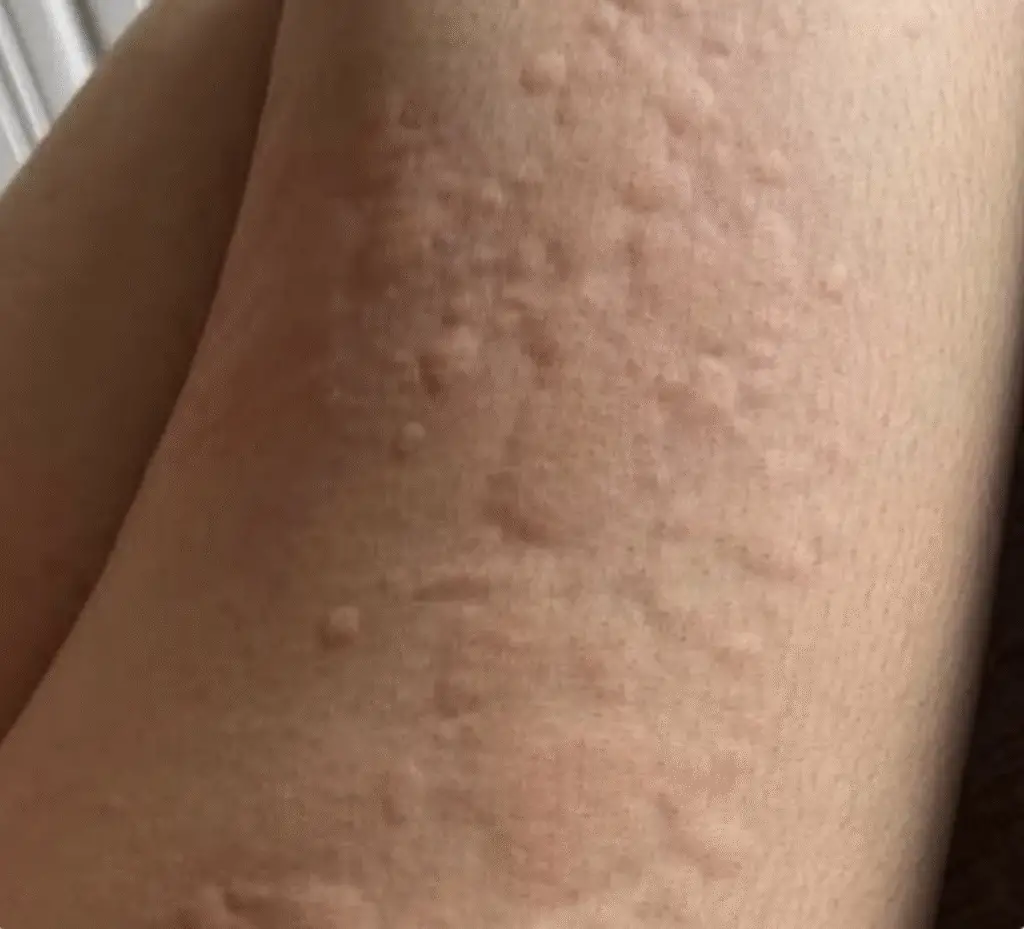
It started innocently enough — a small pink patch on her arm that tingled a little, then faded.
Nothing alarming. Nothing worth worrying about.
But within days, the itch returned… and spread.
First her legs, then her back, then her arms. It felt like tiny sparks dancing under her skin — prickling, burning, impossible to ignore. At night, the itch intensified to the point she couldn’t sleep. She tried antihistamines, switched detergents, avoided scented products… nothing worked.
What she thought was a simple allergy was actually a sign of something far more complicated — and far more common than most people realize.
She wasn’t dealing with a basic skin reaction.
She was experiencing hives — and her journey reveals just how misleading skin symptoms can be.
What Exactly Are Hives?
Hives (also called urticaria) are red, raised, extremely itchy welts that appear suddenly on the skin. They may:
- be tiny, like a pencil eraser
- grow into large, swelling patches
- change shape within minutes
- disappear and reappear in different places
While many people assume hives always stem from allergies, the truth is far more complex.
Common triggers include:
- Stress
- Viral or bacterial infections
- Temperature shifts — hot showers or cold air
- Autoimmune reactions
- Hormone changes
- Chronic underlying illness
And here’s the surprising part: in nearly half of long-term cases, doctors never identify a clear cause.
Allergy or Hives? Why They’re Not the Same
Many people blame allergies when they see a rash — but hives behave very differently from a classic allergic response.
| Allergic Reaction | Hives |
|---|---|
| Triggered by something obvious (foods, pollen, pets, detergents) | Can appear with no identifiable trigger |
| Skin usually clears once allergen is removed | May last weeks or months |
| Typically stays in one area | Moves around the body |
| Usually responds quickly to antihistamines | May require long-term treatment |
In the woman’s case, nothing added up — no new skincare products, no unusual foods, no insect bite.
Her immune system was firing off signals for reasons her doctors couldn’t immediately explain.
Signs You May Be Experiencing Hives
If you’re struggling with unexplained itching, watch for these hallmark symptoms:
- Red, pink, or skin-colored welts that fade within 24 hours
- Intense itching, stinging, or burning
- Swelling that shifts from one spot to another
- Worsening at night or during stress, heat exposure, or exercise
- Recurring outbreaks lasting six weeks or longer (chronic hives)
Seek immediate medical care if hives come with:
- Swelling of the lips, face, or tongue
- Difficulty breathing
- Dizziness or fainting
These may signal anaphylaxis, a dangerous allergic reaction requiring urgent treatment.
Natural Ways to Soothe the Itch
Medical care is essential for chronic hives, but gentle home remedies can ease symptoms while your skin heals.
🌿 Oatmeal & Honey Skin-Soothing Paste
A calming, anti-inflammatory mixture perfect for irritated skin.
You’ll need:
- 2 tbsp finely ground oats (colloidal oatmeal)
- 1 cup cold water
- 1 tbsp raw honey
- A few drops chamomile essential oil (optional)
How to use:
- Mix oats and water into a creamy paste.
- Add the honey and chamomile.
- Apply to itchy areas for 15–20 minutes.
- Rinse with cool water and gently pat dry.
Why it works:
- Oats calm inflammation and support the skin barrier
- Honey moisturizes and soothes
- Chamomile helps reduce redness and nerve irritation
💡 Alternative: A full-body oatmeal bath offers relief for widespread itching.
How to Reduce Future Flare-Ups
Even when you don’t know the cause, certain habits can help minimize outbreaks:
- Keep a symptom diary (foods, stress levels, weather changes, sleep).
- Wear loose, breathable fabrics — cotton is ideal.
- Choose fragrance-free, hypoallergenic skincare products.
- Avoid hot showers, saunas, or high heat exposure.
- Practice stress management: deep breathing, meditation, gentle yoga.
- Stay hydrated — healthy skin reacts less intensely.
When It’s Time to See a Doctor
If hives last longer than six weeks, they’re considered chronic — and that almost always requires medical evaluation.
A specialist may order:
- Blood work
- Allergy testing
- Autoimmune screening
- Prescription-strength antihistamines
- H2 blockers or leukotriene inhibitors
- Advanced treatments like biologic injections (for severe cases)
For many adults, chronic hives stem from an underlying immune imbalance — not a surface-level irritation.
Final Thoughts: When Your Skin Speaks, Listen
This woman’s months-long itch wasn’t “just dry skin” or a minor allergy.
It was her body waving a red flag.
Skin is often the first place internal imbalances appear — and too often we ignore the signs, hoping they go away.
So if you’re battling unexplained itching, redness, or welts:
👉 Don’t brush it off.
👉 Don’t assume it’s nothing.
👉 Pay attention. Ask questions. Seek answers.
Sometimes the smallest symptom tells the biggest story — and catching it early can change everything.
Your skin is communicating with you.
Listen closely.




Leave a Reply