
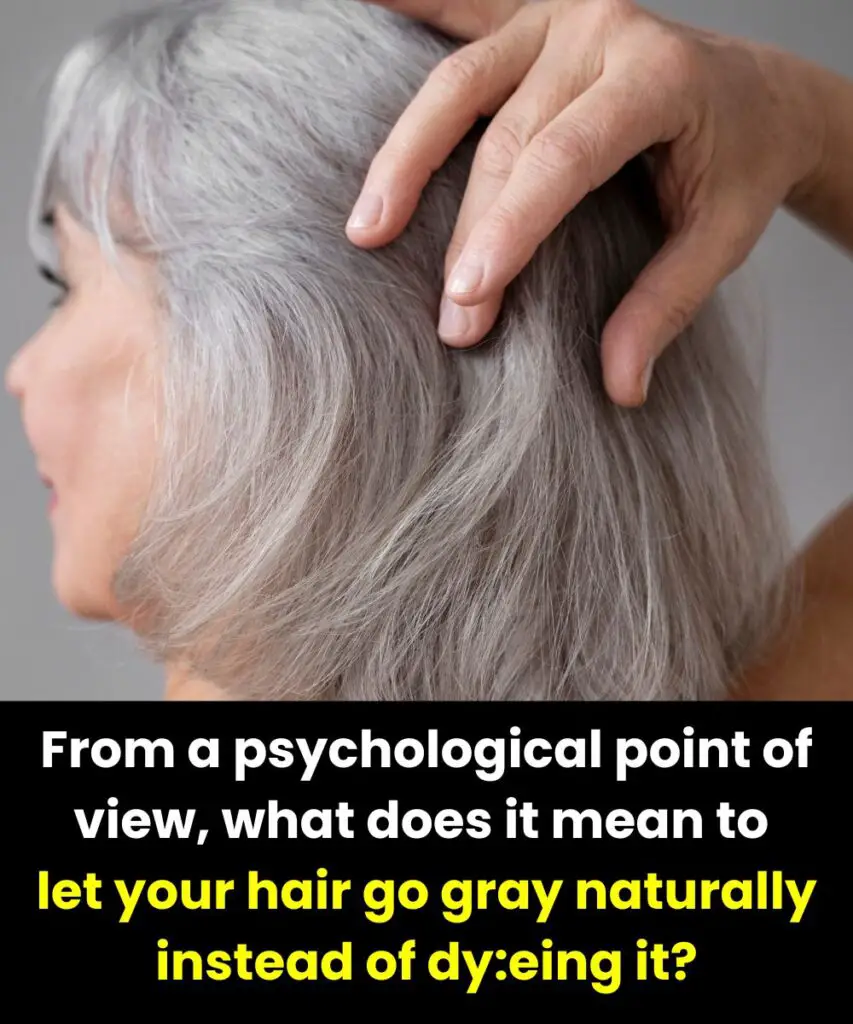
Letting your hair go gray naturally is often viewed as a simple cosmetic decision. However, from a psychological perspective, it can represent something far more meaningful. In a culture that constantly promotes youth, correction, and “anti-aging,” choosing not to dye gray hair can quietly challenge deeply rooted social expectations.
This decision is rarely just about color. Instead, it often reflects a shift in identity, confidence, and self-perception. While some may see gray hair as “letting go,” many who embrace it experience the opposite: a deeper sense of alignment with who they truly are.
A Shift from Approval to Self-Acceptance
For many people, hair dye begins as a way to maintain a certain image. Gray hair often carries cultural associations with aging, decline, or reduced relevance. Even when someone feels confident internally, outside messaging can influence how they present themselves.
Psychologically, choosing to stop dyeing can signal:
- Greater self-acceptance
- Reduced dependence on external validation
- Increased comfort with authenticity
Instead of asking, “How will others perceive me?” the internal dialogue shifts toward, “How do I feel about myself?”
This shift reflects emotional maturity. When self-worth becomes less tied to appearance, individuals often report feeling lighter, less pressured, and more grounded.
Reclaiming Control and Personal Autonomy
Interestingly, letting hair go gray can feel empowering. For years—sometimes decades—many people maintain regular coloring appointments. The routine becomes a form of upkeep, even obligation.
Stopping can represent:
- Reclaiming time and energy
- Rejecting beauty standards that feel restrictive
- Choosing autonomy over expectation
From a psychological standpoint, autonomy plays a key role in well-being. When people make decisions based on personal values rather than social pressure, they often experience greater life satisfaction.
Gray hair, in this sense, becomes less about aging and more about agency.
Redefining the Meaning of Aging
Western culture frequently frames aging as something to fight. Anti-aging products, corrective procedures, and filtered images reinforce the idea that youth equals value.
However, allowing gray hair to show can reflect a reframing process. Instead of resisting time, individuals may begin to see aging as:
- Accumulated wisdom
- Resilience through experience
- Personal growth
- Emotional depth
Psychologically, this reframing reduces anxiety around aging. Acceptance does not mean passivity. Rather, it suggests a healthier relationship with change.
Research in developmental psychology often shows that people who embrace life transitions with acceptance experience lower stress and greater emotional stability.
Confidence Without Performance
There is a quiet confidence in natural gray hair. It does not demand attention, nor does it apologize. It simply exists.
Unlike bold fashion statements or dramatic transformations, gray hair often communicates steadiness. It can reflect an inner sense of security that does not rely on visual reinforcement.
This confidence is not loud. Instead, it is rooted in self-trust.
Psychologically, this may indicate:
- Reduced fear of judgment
- Stronger personal identity
- Greater emotional resilience
The absence of effort to “correct” appearance can signal comfort in one’s own skin.
Social Reactions and Internal Strength
Of course, choosing to go gray may invite comments—both positive and critical. Navigating those reactions requires internal clarity.
When someone feels secure in their choice, external opinions lose intensity. This does not mean criticism never stings. However, the emotional impact often decreases when self-approval strengthens.
This dynamic reflects an important psychological principle: the more stable your internal validation system, the less you rely on outside approval.
A Personal Journey, Not a Universal Rule
It is important to note that there is no psychological superiority in going gray. Choosing to dye hair can also reflect creativity, self-expression, or personal preference.
The key psychological factor is intention.
If someone dyes their hair because they genuinely enjoy the look, that reflects autonomy. If someone stops dyeing because it aligns with their evolving identity, that also reflects autonomy.
The meaningful shift happens when the decision feels internally chosen rather than externally pressured.
The Deeper Meaning Behind the Silver Strands
Ultimately, letting your hair go gray naturally can symbolize:
- Emotional growth
- Authentic self-expression
- Reduced attachment to societal expectations
- Comfort with change
For many, it marks a transition from performing an image to inhabiting a self.
Gray hair, then, becomes less about age and more about integration. It represents a stage of life where confidence stems from experience rather than appearance.
And perhaps that is why it can feel so powerful.
Not because it changes how others see you.
But because it changes how you see yourself.




Leave a Reply