
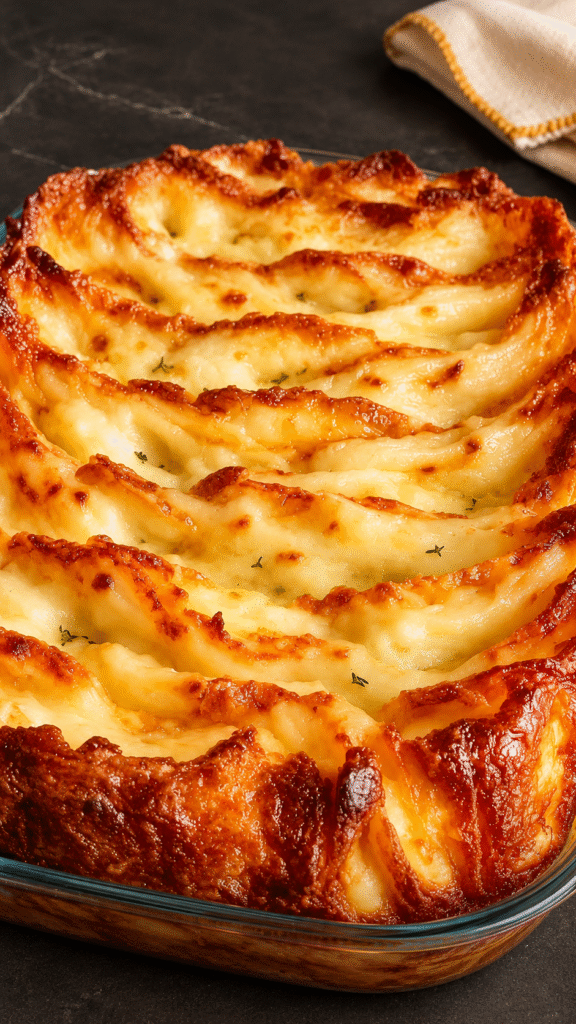
Crispy Fluffy Layered Potato Bake is what I'd put alongside a roast chicken for Sunday dinner when the potatoes deserve as much attention as the main dish. A hot pan comes to the table with rows of deep golden edges showing above the rim. Slide a spoon between the rows and you'll find tender slices coated with garlic butter, Parmesan, cream, and thyme.
The recipe starts with three pounds of potatoes and a small baking dish. Peel and slice the potatoes, toss them in a big bowl, and turn the slices upright as you pack them into the pan. While the oven heats and the potatoes bake, you have time to make the rest of dinner. The first 45 minutes happen under foil. The second stretch is uncovered so those exposed edges can take on the color and crunch that make the dish worth bringing to the table in its pan.
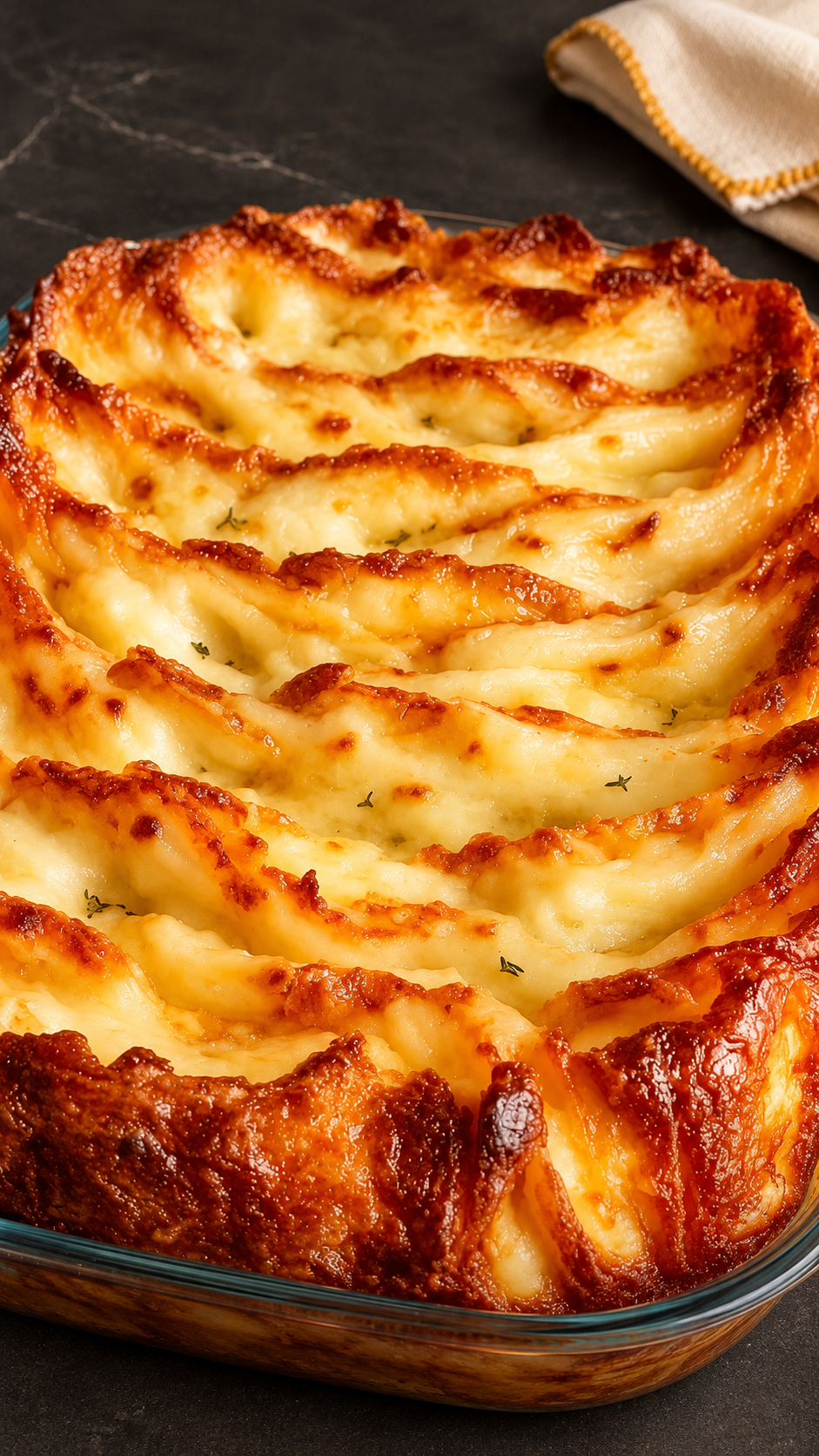
Crispy Fluffy Layered Potato Bake
Equipment
- Loaf pan or small baking dish Grease before arranging the potatoes. Use a broiler-safe pan for the optional broil.
- Mandoline slicer Optional. Use its hand guard for even 1/8-inch slices.
- Large mixing bowl For tossing the potato slices.
- mixing spoon or spatula
- Measuring cups and spoons
- Aluminum foil For the first 45 minutes of baking.
Ingredients
- 3 pounds russet or Yukon gold potatoes, peeled and sliced about 1/8 inch thick
- 1/2 cup butter, melted
- 3 cloves garlic, minced
- 1 cup grated Parmesan cheese, divided
- 1 teaspoon salt
- 1/2 teaspoon black pepper
- 1 teaspoon fresh thyme leaves
- 1/2 cup heavy cream
Instructions
- Preheat the oven to 375°F. Grease a loaf pan or small baking dish.
- Peel the potatoes and slice them about 1/8 inch thick. If using a mandoline, use the hand guard.
- In a large bowl, toss the slices with melted butter, minced garlic, 1/2 cup Parmesan, salt, black pepper, and fresh thyme until evenly coated.
- Gather the potato slices into small stacks. Stand the stacks on their sides in the greased dish and pack them tightly together.
- Pour the heavy cream over the arranged potatoes and sprinkle with the remaining 1/2 cup Parmesan.
- Cover with aluminum foil and bake for 45 minutes at 375°F.
- Remove the foil and bake uncovered for another 30-40 minutes, until the potatoes are tender and the tops are deep golden and crispy.
- For extra crunch, broil for the final 2-3 minutes in a broiler-safe pan. Watch closely.
Notes
Why This Layered Potato Bake Works
Upright slices give you crispy edges across the pan
The fun part of making this bake is turning the potato slices on their sides. Gather a few slices into a pile like a small deck of cards, then turn the pile so one curved edge of each slice points upward. Repeat that arrangement across the pan. You'll see a row of exposed potato edges every time you set down another stack.
As the bake finishes uncovered, those thin edges brown in the oven. The grated Parmesan lands across the ridges and melts into the tops of the rows. Below that surface, the slices cook close together with butter and cream. You get some crunch and some soft potato in the same spoonful. When you serve it, slide a serving spoon down the side of a stack and lift from underneath so each portion gets a share of the top.
The foil gives the centers time to soften
The butter mixture coats the individual slices, and the cream goes over the packed potatoes just before baking. Under foil, moisture stays around the potatoes as they cook. That covered stretch gives the thickest part of the bake time to become tender while the top is still pale.
Once the foil comes off, moisture can escape from the surface and the Parmesan starts to brown. Give the uncovered stage its full attention near the end. A knife should slide through a slice near the center with little resistance, and the tops should look deep golden. The color tells you how the surface is doing. The knife tells you how the middle is doing. Check both before you pull the pan.
Choosing the Potatoes, Cheese, and Seasoning
Russets give you a fluffier bite and Yukon golds give you a creamier one
Russet potatoes are a good choice when you're after a fluffy interior and well-defined crispy edges. Their long shape can also give you large slices that are easy to gather into rows. Yukon gold potatoes work with the same quantities and bake in the same way. They give the centers a creamier texture, and their naturally yellow flesh makes the layers look particularly buttery when you serve them.
Either way, consistency matters when you slice. A thick slice tucked between thinner ones can stay firm even after the rest of the stack feels ready. Aim for about 1/8 inch throughout. When a potato gives you several small rounds toward its ends, save those for the corners or any spaces between stacks. They'll cook along with the larger slices and help hold the rows in place.
Divide the Parmesan before you start tossing
Grate one cup of Parmesan and separate it into two half-cup portions. The first half goes into the bowl with the melted butter, garlic, salt, pepper, and fresh thyme so it seasons the inner layers. The other half goes onto the assembled potatoes after the cream. A fine grate makes it easy to spread the cheese in a thin layer across the pan.
Mince the garlic finely so it disperses when you turn the potatoes. Strip the thyme leaves from their stems and measure the leaves by themselves. If the garlic or thyme collects in one part of the bowl, slide a spatula down to the bottom and lift some of that mixture up through the potatoes. A few extra turns help distribute the seasonings before you stack the slices.
How to Assemble the Pan and Judge Doneness
Slice evenly, then build the rows in small batches
A mandoline set to about 1/8 inch makes quick work of three pounds of potatoes. Use its hand guard. If you're working with a knife, slice a thin piece from the side of a peeled potato to create a flat surface so the potato sits steadily on the board. Keep your slices as even as you can and give yourself room to work. A large mixing bowl gives you space to lift and turn the slices without breaking them.
Grease the bottom and sides of your baking dish before you start stacking. Pick up several slices at a time and set the first stack against one end of the pan. Add the next stack right against it and keep going. If the first stack leans before its neighbor is in place, steady it with one hand as you add more slices with the other. Fill obvious gaps with smaller pieces. Once the rows support one another, pour the cream slowly from one end to the other so it can trickle between the slices.
Check the center before giving the top extra color
After 45 minutes, lift the foil carefully and let the steam escape away from you. Return the dish to the oven for the uncovered stage and begin checking after 30 minutes. Look at the center rows as well as the edges of the pan. The outside can look ready while the potatoes in the middle still need time. Use a thin knife to check a couple of spots between the taller rows.
If the potatoes are tender and you'd like a little more crunch, use the broiler for the final two to three minutes. Check that your pan is rated for broiler use before choosing this step. That matters especially when you're using glass, since many glass baking dishes are designed for oven baking only. Stay by the oven and pull the pan as soon as the exposed ridges reach the color you want. The Parmesan can brown quickly under direct heat.
Serving, Reheating, and Herb Variations
Serve it with a main dish and something fresh
This bake fits comfortably next to roast chicken, sliced beef, or a platter of roasted vegetables. For a holiday meal, a crisp green salad with a sharp vinaigrette or a simple side of green beans goes well with the richness of the cream and Parmesan. At a smaller dinner, you can set the pan on a trivet and let everyone choose between a crisp outside stack and a softer helping from the middle.
Fresh thyme gives the bake a gentle savory flavor. For an optional variation, try a little finely chopped fresh rosemary in place of the thyme. Rosemary has a stronger flavor, so use a light hand and chop it finely before adding it to the bowl. If you want to change the texture while keeping the same seasoning, make the recipe once with russets and again with Yukon golds. Both give you a crisp top, with a different bite in the center.
Use dry heat to bring back the crisp edges
You can bake the dish a day ahead. Chill it, then reheat it uncovered at 400°F until the center is hot and the top has crisped again. Plan this around your oven schedule if you're also roasting a main dish. A slice from the middle will help you tell whether the whole pan has heated through. Give the middle time to warm before you serve it.
Refrigerate leftovers for up to four days. For a single portion, use a hot oven or an air fryer so the ridges get direct heat. Leave a little room around the serving so the edges have a chance to crisp. For several servings, arrange them in a single layer. If you tuck the portions tightly together, the sides that touch will stay softer.
Ingredients
- 3 pounds russet or Yukon gold potatoes
- 1/2 cup butter, melted
- 3 cloves garlic, minced
- 1 cup grated Parmesan cheese, divided
- 1 teaspoon salt
- 1/2 teaspoon black pepper
- 1 teaspoon fresh thyme leaves
- 1/2 cup heavy cream
Instructions
- Preheat the oven to 375°F. Grease the bottom and sides of a loaf pan or small baking dish.
- Peel the potatoes and slice them about 1/8 inch thick. If using a mandoline, use the hand guard to keep the slices even and your hand clear of the blade.
- Put the slices in a large bowl. Add the melted butter, garlic, 1/2 cup Parmesan, salt, pepper, and thyme. Toss with a spoon or spatula until the slices are evenly coated.
- Gather the potato slices into small stacks. Stand the stacks on their sides in the prepared dish, with the thin edges facing up. Pack the stacks tightly together.
- Pour the heavy cream over the potatoes. Sprinkle the remaining 1/2 cup Parmesan evenly over the exposed edges.
- Cover the dish with aluminum foil and bake at 375°F for 45 minutes.
- Remove the foil and bake uncovered for another 30 to 40 minutes, until the potatoes are tender and the tops are deep golden and crisp.
- For extra crunch, broil for the final two to three minutes if your pan is broiler-safe. Watch closely.
Frequently Asked Questions
Can I make this without a mandoline?
Yes. Use a sharp chef's knife and a stable cutting board. Cut a small piece off the side of each peeled potato to make a flat base, then slice across the potato. Aim for an even thickness of about 1/8 inch. Check the middle for tenderness once the bake is browned.
What if the potato stacks keep falling over?
The first few stacks can lean until there are enough slices in the pan to hold them upright. Start against one end, then brace each stack with the next one as you go. Wedge smaller rounds into any loose spots, especially near the corners.
Can I add all the Parmesan on top?
The recipe divides the cheese so there's Parmesan between the slices and across the surface. Measure out two equal portions. Toss one with the potatoes and scatter the second over the pan just before it goes into the oven.
How do I know the potatoes are cooked all the way through?
Push a thin knife into a slice near the middle of the pan where the potatoes are tightly packed. It should slide through easily. If the knife hits a firm spot, let the dish bake a little longer and check again. The exposed edges should also be deep golden and crisp when you serve it.
Can I skip the broiler?
Yes. The uncovered bake browns and crisps the edges on its own. Use the broiler only if you'd like a little more color or crunch after the potatoes are tender. If you're using a dish that's unsuitable for the broiler, finish it with the regular oven heat.
Conclusion
Crispy Fluffy Layered Potato Bake gets its texture from the way you slice, stack, and bake the potatoes. Cut the slices evenly, coat them with garlic butter and Parmesan, and stand them in tight rows before pouring over the cream. The foil helps the potatoes soften, and the uncovered finish gives the edges time to turn golden. Serve it in the baking dish so everyone can see those rows before the first spoonful comes out.


Leave a Reply