
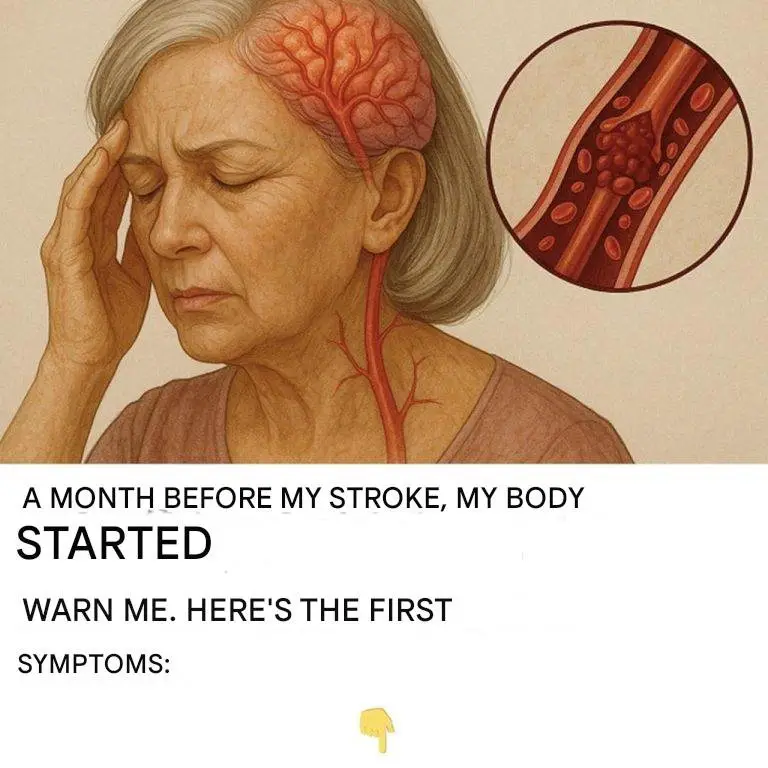
We live in constant motion. We push through exhaustion, power through stress, and tell ourselves we will slow down later. Our bodies often cooperate—until they do not. What many people do not realize is that the body rarely fails without warning. Long before a major medical event, it sends signals that are easy to dismiss and hard to recognize.
A month before my stroke, my body tried repeatedly to get my attention. I ignored those signs, not out of carelessness, but because I misunderstood them. I believed they were temporary, harmless, or unrelated. Looking back, each one was a clear neurological warning.
I share this story to inform, not to frighten. Strokes are medical emergencies, but they are often preceded by subtle clues. Recognizing those clues early can save brain function, independence, and life itself.
Understanding What a Stroke Really Is
How blood flow disruption affects the brain
A stroke occurs when blood flow to part of the brain is interrupted. In most cases, this happens because of a clot blocking an artery. Less commonly, it results from a ruptured blood vessel. In both situations, brain cells are deprived of oxygen and begin to die within minutes.
The effects depend on which area of the brain is affected. Speech, vision, movement, memory, and balance can all be impacted. Even small interruptions can cause lasting changes if not treated quickly.
What makes a TIA especially dangerous
A transient ischemic attack, or TIA, is often called a “mini-stroke.” Symptoms mimic a full stroke but resolve within minutes or hours as blood flow returns. This recovery creates a dangerous illusion of safety.
A TIA is not a false alarm. It is a red-alert warning. Studies show that a significant percentage of people who experience a TIA go on to have a full stroke within days or weeks if no treatment occurs. In other words, a TIA is the body’s last clear warning.
The First Warning: Sudden Changes in Vision
What I noticed
One morning while driving, my vision felt strangely narrow. I could see clearly straight ahead, but the edges of my vision seemed dim and hazy, almost like looking through a tunnel. The sensation passed quickly, and I blamed eye strain and screen fatigue.
What it actually meant
This symptom was a condition known as amaurosis fugax. It occurs when blood flow to the optic nerve is temporarily reduced. Although vision returns, the cause is vascular, not optical. It is a classic warning sign of a TIA and an early indicator of stroke risk.
Any sudden change in vision, even if brief, should be treated as urgent.
The Second Warning: One-Sided Weakness
What I dismissed as overexertion
During a routine workout, my right arm suddenly felt useless. It was not sore or painful. It simply would not respond properly. I would grip a weight, and it would slip from my hand. The weakness came and went over several days.
I told myself I had strained a muscle or pushed too hard.
Why this was a neurological red flag
Unilateral weakness—weakness affecting one side of the body—is a hallmark sign of neurological disruption. When the brain struggles to send signals to muscles, coordination and strength suffer. Even when symptoms appear mild or temporary, they should never be ignored.
The Third Warning: Unusual Memory Lapses
Moments that felt unsettling
During a meeting, I repeated the same point twice without realizing it. Later, at a store, I asked for an item I had already been handed. These were not typical forgetful moments. They felt like brief mental resets.
The underlying cause
These episodes were not ordinary lapses. They aligned with transient disruptions in memory processing, sometimes called transient global amnesia. When blood flow to certain brain regions fluctuates, short-term memory can momentarily shut down.
Memory gaps that feel sudden, repetitive, or out of character deserve immediate evaluation.
The Fourth Warning: Extreme Blood Pressure Swings
A sudden loss of stability
My blood pressure had always been stable. Then, within two days, it swung dramatically—from unusually low to dangerously high. I monitored it, but I did not act.
Why this mattered
The brainstem helps regulate blood pressure. When it comes under stress due to impaired blood flow, blood pressure control can become erratic. These swings were not random. They were signs of autonomic dysfunction linked to neurological stress.
Sudden, unexplained blood pressure instability should never be brushed aside.
The Moment I Finally Listened
When the arm weakness returned, this time accompanied by facial tingling, I sought medical help immediately. Imaging revealed the cause: a small clot had briefly blocked a branch of a major cerebral artery. I had experienced a TIA.
Because treatment began quickly, the outcome was positive. Blood-thinning medication, cholesterol management, lifestyle changes, and close monitoring followed. Today, I have no lasting deficits, but I carry a lasting lesson.
Why These Warnings Are So Often Missed
Symptoms feel ordinary
Fatigue, vision changes, dizziness, and forgetfulness all have common explanations. That familiarity makes them easy to dismiss.
Cultural pressure to push through
Many people are taught to ignore discomfort and keep going. This mindset can be dangerous when applied to neurological symptoms.
Lack of public awareness
Most people associate strokes with dramatic collapse or slurred speech. In reality, early warning signs are often quiet and subtle.
When to Seek Immediate Help
Call emergency services right away if you or someone near you experiences sudden, unexplained:
- Vision changes
- Weakness or numbness on one side
- Speech difficulty
- Confusion or memory gaps
- Severe dizziness or headache
Waiting to see if symptoms pass can cost irreplaceable brain tissue. In stroke care, time is critical.
Final Thoughts
My stroke did not come out of nowhere. It announced itself clearly, repeatedly, and early. I just did not understand the language at the time.
Listening to your body is not anxiety. It is awareness. The warning signs of a stroke are not inconveniences to push through. They are invitations to act while action can still change the outcome.
Time lost is brain lost.
Time saved is a future preserved.




Leave a Reply