
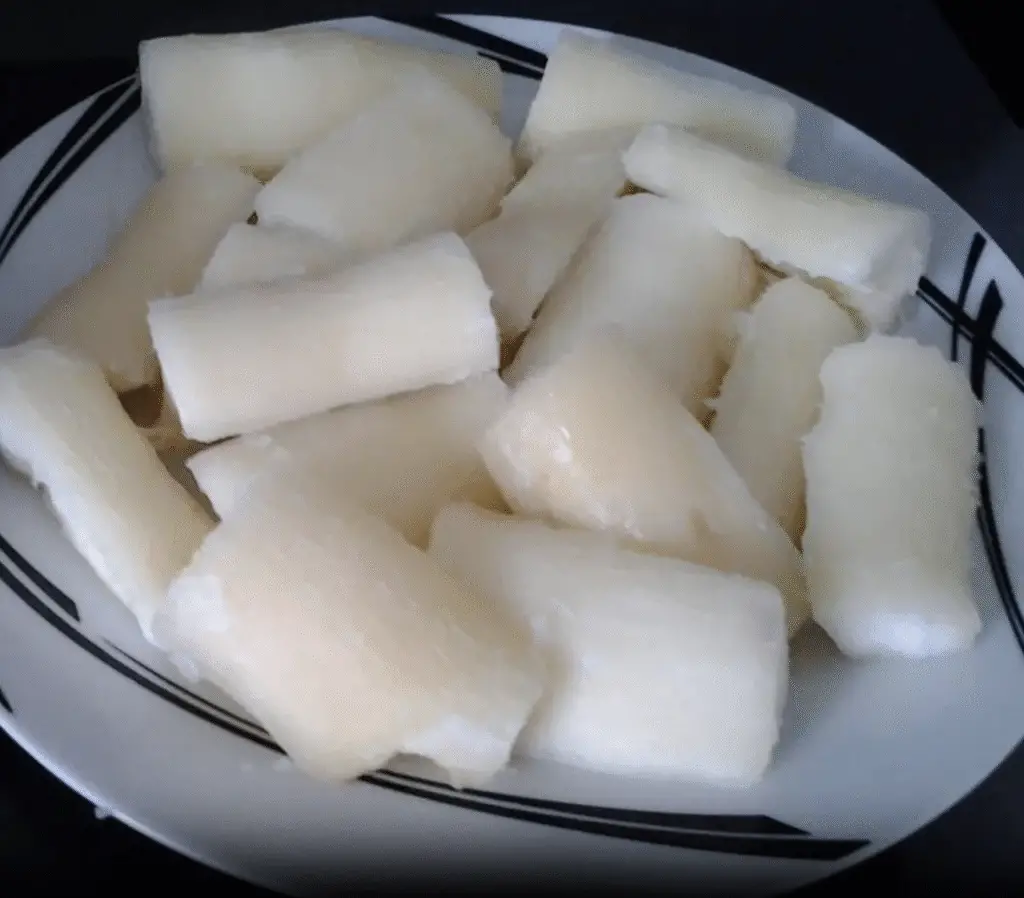
It is grown in backyards, harvested from dusty fields, and cooked in countless kitchens around the world. It feeds families, stabilizes economies, and stands between millions of people and hunger. Yet this same food carries a chilling reputation: when prepared incorrectly, it can kill.
That food is cassava.
Often described as the “world’s deadliest food,” cassava is a starchy root vegetable that sustains nearly 500 million people worldwide. At the same time, it is responsible for over 200 deaths each year and countless cases of permanent neurological damage. This contradiction raises an unsettling question: how can one of the world’s most important foods also be one of its most dangerous?
The answer lies not in the plant itself, but in a complex mix of biology, poverty, tradition, and survival.
Cassava: A Lifeline for Millions
Cassava, also known as yuca (not to be confused with the ornamental plant yucca), is a tropical root native to South America. Over centuries, it spread across Africa, Asia, and the Caribbean, where it became a cornerstone of local diets.
The reason is simple: cassava is incredibly resilient.
It thrives in poor soil, survives droughts that kill other crops, and produces large yields with minimal resources. In regions facing climate instability, conflict, or economic hardship, cassava often becomes the last reliable food source.
Today, cassava provides a major share of daily calories for hundreds of millions of people. In some communities, it accounts for more than half of total energy intake. For these populations, cassava is not just food—it is security.
The Two Faces of Cassava: Sweet and Bitter
Not all cassava is equally dangerous. The plant exists in two main varieties:
Sweet Cassava
Sweet cassava contains relatively low levels of natural toxins. When peeled and cooked properly, it is generally safe for consumption. This is the type most commonly sold fresh in markets outside tropical regions.
Bitter Cassava
Bitter cassava is where the danger lies. It contains high levels of cyanogenic glycosides, natural compounds that can release hydrogen cyanide when the plant is damaged.
Bitter cassava is often preferred in vulnerable regions because it is:
- More resistant to pests
- Higher yielding
- Better suited to harsh growing conditions
Ironically, the very qualities that make it reliable also make it dangerous.
Why Cassava Can Become Deadly
The toxicity of cassava comes from a compound called linamarin. When cassava roots are peeled, grated, or chewed, linamarin breaks down and releases hydrogen cyanide—a fast-acting poison.
In small amounts, the human body can detoxify cyanide. But when cassava is eaten without proper processing, cyanide levels can overwhelm the body’s defenses.
This is not a theoretical risk. It happens every year.
The Health Consequences of Improper Cassava Preparation
When cassava is not detoxified correctly, it can cause both acute and chronic health problems.
Acute Cyanide Poisoning
Symptoms can appear within hours and include:
- Nausea and vomiting
- Dizziness and confusion
- Rapid breathing
- Seizures
- Cardiac failure
- Death
Children are especially vulnerable, as are people already weakened by malnutrition.
Konzo: A Silent Epidemic
One of the most devastating outcomes of cassava toxicity is konzo, a neurological disease found primarily in parts of Central and East Africa.
Konzo causes:
- Sudden and irreversible paralysis of the legs
- Lifelong disability
- Loss of independence and economic productivity
Konzo disproportionately affects children and women of childbearing age, trapping families in cycles of poverty.
Tropical Ataxic Neuropathy
Chronic exposure to low levels of cyanide can also lead to:
- Vision and hearing loss
- Poor coordination
- Muscle weakness
- Cognitive impairment
These conditions do not kill quickly, but they permanently alter lives.
According to the World Health Organization, cassava is responsible for more cases of food-related cyanide poisoning than any other crop in the world.
Why Poisoning Still Happens
Cassava poisoning is rarely the result of ignorance or carelessness. More often, it is the result of desperation.
Drought and Famine
During droughts, cassava is often harvested early, when toxin levels are highest. Hunger forces families to eat what is available, even if it is not ready.
Lack of Clean Water
Proper cassava processing requires soaking roots in water for days. In areas without reliable access to clean water, this step may be skipped.
Poverty and Time Pressure
Traditional detoxification methods take time. When families are hungry, waiting several days can feel impossible.
Conflict and Displacement
In refugee settings or conflict zones, people may lose access to knowledge, tools, or conditions needed for safe preparation.
In these circumstances, cassava becomes both a savior and a threat.
Traditional Knowledge That Saves Lives
Despite its dangers, cassava has been eaten safely for generations. Indigenous processing methods are remarkably effective at removing toxins when followed correctly.
Key Detoxification Steps
- Peeling – Removes the outer layer where toxins are concentrated
- Soaking – Roots are submerged for 1–3 days, allowing fermentation to break down cyanide compounds
- Grating and Pressing – Releases toxic liquid
- Drying – Often done in the sun to further reduce cyanide content
- Thorough Cooking – Boiling, roasting, or frying neutralizes remaining toxins
When these steps are respected, cassava is safe, nourishing, and versatile.
Cassava in the Modern World
Cassava is not only a subsistence crop. It plays a major role in global food systems and industry.
Common cassava-based products include:
- Tapioca pearls
- Cassava flour
- Garri
- Fufu
- Chips and snacks
- Biofuels and industrial starches
In industrial processing facilities, strict standards ensure safety. The risk is highest where cassava is processed at home under difficult conditions.
Why the World Cannot Simply Stop Eating Cassava
It is easy to ask why people continue to eat such a risky food. The answer is uncomfortable but clear: for many, there is no alternative.
Cassava:
- Grows where wheat, rice, and maize fail
- Requires fewer inputs than most crops
- Can remain in the ground for months, acting as a living food reserve
- Provides calories when nothing else will
Removing cassava without replacing it would lead to widespread hunger.
Scientific Efforts to Reduce the Risk
Researchers and organizations are working to make cassava safer without eliminating it.
Low-Cyanide Varieties
Plant breeders are developing cassava strains with reduced toxin levels while preserving resilience.
Community Education
Programs teach safe processing methods, particularly in rural and high-risk areas.
Rapid Testing Kits
Simple field tests allow families to check cyanide levels before consumption.
Industrial Processing Expansion
Encouraging centralized processing reduces household-level risk.
Countries like Nigeria, the world’s largest cassava producer, have made significant progress through regulation and education.
Cassava as a Symbol of Inequality
Cassava’s danger is not just a food issue—it is a social one.
People do not die from cassava because they choose risk. They die because:
- They lack clean water
- They lack time
- They lack options
Cassava poisoning highlights the intersection of food security, poverty, and public health.
A Food of Contradictions
Cassava feeds half a billion people. It kills hundreds each year. It represents resilience and vulnerability at the same time.
The real tragedy is not that cassava exists, but that too many people are forced to depend on it under unsafe conditions.
With knowledge, resources, and support, cassava can remain what it was always meant to be: a life-sustaining crop, not a lethal one.
Final Reflection
The next time you enjoy tapioca pudding, gluten-free cassava bread, or a plate of fufu, remember the story behind the root.
Cassava is not just food.
It is history.
It is survival.
It is proof that safety is not only about what we eat—but about the world we live in.
And with the right knowledge, even the world’s “deadliest food” can become a source of life rather than loss.



Leave a Reply