
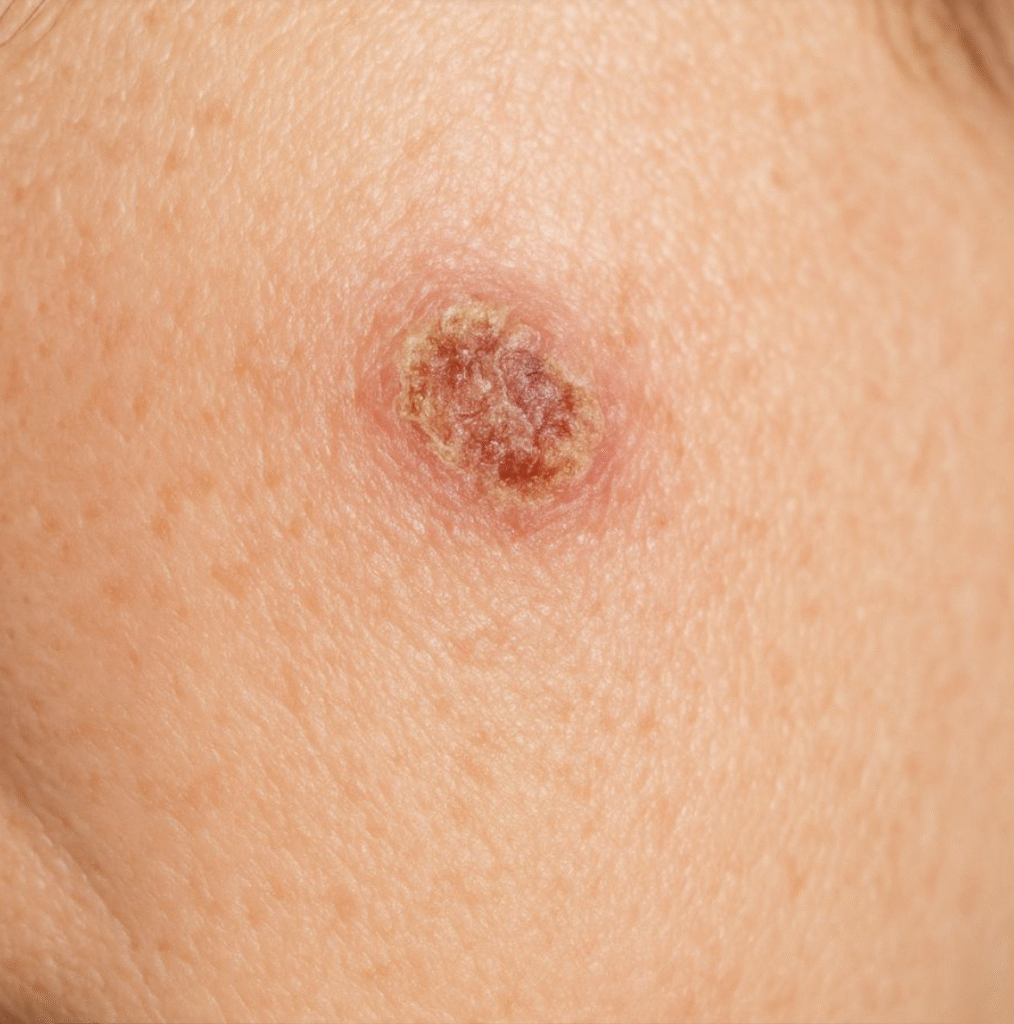
The Crusty Spot That Won’t Heal can feel easy to ignore at first. It might start as a tiny scab, a flaky patch, or a sore that seems harmless. However, when that same crusty spot keeps returning, oozing, scaling, or refusing to heal after several weeks, your skin may be signaling that something deeper is happening.
The Crusty Spot That Won’t Heal is not always dangerous, but it should never be dismissed. Skin is your body’s largest organ, and it often shows early warning signs long before other symptoms appear. Paying attention early can make a meaningful difference in outcomes and peace of mind.
A Short Personal Story About a Non-Healing Spot
I once brushed off a small crusty patch on my forearm, assuming it was just dry skin from winter weather. Weeks passed, and it never fully healed. It would scab, fall off, and return in the exact same place. Learning about The Crusty Spot That Won’t Heal changed my perspective. That experience reinforced how important it is to listen to skin changes instead of minimizing them. Awareness turned uncertainty into proactive care.
Why a Crusty Spot That Won’t Heal Matters
Normal Healing vs. Warning Signs
The Crusty Spot That Won’t Heal stands out because healthy skin follows a predictable healing pattern. Most minor cuts or irritations improve within one to two weeks.
When a spot lingers beyond two to four weeks, repeatedly crusts over, or bleeds easily, it signals abnormal repair. This delay can indicate chronic inflammation, infection, or abnormal cell growth.
Why Location and Duration Are Key
Spots on sun-exposed areas such as the face, ears, scalp, neck, arms, or hands deserve extra attention. These areas receive cumulative UV exposure over time.
The Crusty Spot That Won’t Heal in the same exact location is especially important to evaluate, because recurring lesions often reflect an underlying cause rather than random irritation.
Common Causes of a Crusty Spot That Won’t Heal
Actinic Keratosis (AK)
Actinic keratosis appears as a rough, scaly, or crusty patch that may feel like sandpaper. It often blends into the skin but feels more noticeable by touch.
The Crusty Spot That Won’t Heal caused by actinic keratosis is considered precancerous. While not all cases progress, untreated lesions can develop into squamous cell carcinoma over time.
Squamous Cell Carcinoma (SCC)
Squamous cell carcinoma often appears as a thickened, crusted, or ulcerated sore that may bleed or scab repeatedly.
The Crusty Spot That Won’t Heal related to SCC tends to grow slowly but can spread if ignored. Early detection leads to highly effective treatment.
Other Skin Conditions That Can Cause Non-Healing Spots
Basal Cell Carcinoma (BCC)
Basal cell carcinoma is the most common skin cancer. It may look like a shiny bump, a pink patch, or a sore that crusts and heals incompletely.
The Crusty Spot That Won’t Heal from BCC often appears subtle, which is why it can go unnoticed for months.
Chronic Irritation or Infection
Repeated friction, allergic reactions, or bacterial infections can prevent proper healing. Areas rubbed by clothing or exposed to moisture may stay inflamed.
In these cases, The Crusty Spot That Won’t Heal may improve slightly but never fully resolve without treatment.
Autoimmune and Inflammatory Causes
Psoriasis and Eczema
Autoimmune skin conditions can create thick, scaly patches that crack and crust. These areas may itch, burn, or flare repeatedly.
The Crusty Spot That Won’t Heal associated with these conditions often appears alongside other skin changes elsewhere on the body.
Poor Circulation and Diabetes
Reduced blood flow slows healing. People with diabetes or vascular conditions may notice sores that linger longer than expected.
The Crusty Spot That Won’t Heal in these cases reflects impaired repair rather than abnormal cell growth, but still requires evaluation.
Red Flags You Should Never Ignore
Symptoms That Warrant Prompt Evaluation
The Crusty Spot That Won’t Heal deserves medical attention if it bleeds easily, grows larger, becomes painful, or changes color.
Other warning signs include irregular borders, thickening, or a sore that looks different from surrounding skin.
Why Waiting Can Be Risky
Skin cancers grow slowly, which creates a false sense of safety. Early lesions are easier to treat and leave minimal scarring.
Delaying evaluation of The Crusty Spot That Won’t Heal can allow progression that requires more extensive treatment later.
What to Do If You Notice a Non-Healing Crusty Spot
Step One: Observe Without Picking
Avoid scratching or picking. Repeated trauma interferes with healing and makes assessment harder.
Note how long the spot has been present and whether it changes in size, texture, or color.
Step Two: Seek Professional Evaluation
A dermatologist can assess The Crusty Spot That Won’t Heal visually and, if needed, perform a simple biopsy.
Biopsies are quick, minimally invasive, and provide clear answers. Knowing is always better than guessing.
Prevention and Skin Awareness
Protecting Your Skin Daily
Sun protection reduces the risk of many non-healing lesions. Use sunscreen, protective clothing, and shade consistently.
Skin checks at home help you notice changes early. Familiarity with your own skin is powerful prevention.
Why Self-Checks Matter
Monthly skin self-exams increase the likelihood of spotting The Crusty Spot That Won’t Heal early.
Early awareness supports faster treatment, better outcomes, and less anxiety.
Frequently Asked Questions
How long is too long for a scab to heal?
More than two to four weeks deserves evaluation.
Can a crusty spot be harmless?
Yes, but persistence increases concern.
Does skin cancer always hurt?
No. Many lesions are painless.
Can moisturizer heal a non-healing spot?
Moisturizer may soothe but will not fix underlying causes.
Is biopsy painful?
Most are quick and done with local numbing.
Conclusion
The Crusty Spot That Won’t Heal is your skin’s way of asking for attention. While many causes are treatable and benign, persistent sores should never be ignored. Early evaluation provides clarity, reassurance, and effective treatment when needed. Listening to your skin is one of the simplest and most powerful health habits you can develop.


Leave a Reply