
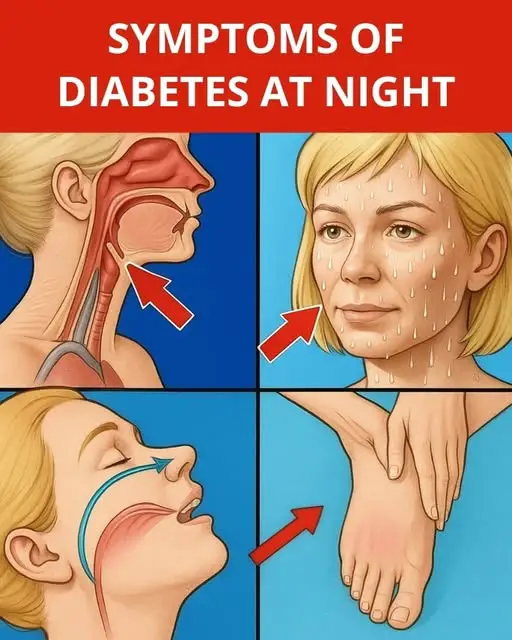
High blood sugar—also known as hyperglycemia—often develops quietly over days or weeks. Because the symptoms can be subtle at first, many people dismiss them until more serious complications appear. Left untreated, consistently high blood glucose can lead to nerve damage, kidney disease, vision problems, and heart disease.
Recognizing the early warning signs gives you the opportunity to act before lasting damage occurs. Here are seven common signals your body may be sending.
1. Persistent Thirst (Polydipsia) 💧
Feeling constantly thirsty—even after drinking plenty of water—is one of the earliest signs of high blood sugar.
Why it happens:
Excess glucose in the bloodstream forces the kidneys to draw more fluid from the body to dilute it. This leads to dehydration and a dry mouth, triggering intense thirst.
Pay attention if: You’re drinking water all day and still can’t quench your thirst.
2. Frequent Urination (Polyuria) 🚻
Urinating more often than usual, especially during the night, is another key warning sign.
Why it happens:
Your kidneys work harder to remove excess sugar, flushing it out through urine along with extra water.
Pay attention if: The frequency and volume of urination increase noticeably without changes in fluid intake.
3. Increased Hunger (Polyphagia) 🍽️
Feeling hungry all the time—even shortly after eating—can signal elevated blood sugar.
Why it happens:
When insulin isn’t working properly, glucose can’t enter your cells for energy. Your body responds by sending hunger signals, even though blood sugar levels are high.
Pay attention if: You feel unsatisfied after meals or crave food constantly.
4. Ongoing Fatigue and Low Energy 😴
Unusual tiredness or weakness that doesn’t improve with rest may point to high blood sugar.
Why it happens:
Without proper glucose uptake, your cells are essentially “starving” for energy, leading to fatigue and sluggishness.
Pay attention if: You’re exhausted despite sleeping well and eating regularly.
5. Blurred Vision 👀
Sudden or fluctuating blurry vision can be an early symptom of hyperglycemia.
Why it happens:
High blood sugar pulls fluid from the lenses of the eyes, altering their shape and ability to focus. Over time, repeated episodes can contribute to long-term eye damage.
Pay attention if: Vision improves when blood sugar levels stabilize.
6. Slow-Healing Wounds or Frequent Infections 🧬
Cuts, sores, or infections that take longer than usual to heal may be linked to high glucose levels.
Why it happens:
Elevated blood sugar impairs circulation and weakens immune function, making it harder for the body to fight infections and repair tissue.
Common issues include:
- Recurrent urinary tract infections
- Yeast infections
- Cuts or sores that heal slowly
7. Tingling or Numbness in Hands and Feet 🖐🦶
A burning, tingling, or numb sensation—especially in the extremities—may indicate nerve damage.
Why it happens:
Prolonged high blood sugar damages the small blood vessels that nourish nerves, leading to diabetic neuropathy.
Pay attention if: This symptom appears alongside others and persists.
What to Do Next
If you notice several of these symptoms occurring consistently, don’t ignore them. A simple blood test—such as a fasting blood glucose or A1C test—can provide clarity.
If You Already Have Diabetes:
- Monitor your blood sugar regularly
- Follow medication or insulin plans as prescribed
- Stay hydrated and eat a balanced, fiber-rich diet
- Exercise regularly to improve insulin sensitivity
Final Thought
High blood sugar often whispers before it shouts. These symptoms may seem minor on their own, but together they tell an important story about what’s happening inside your body.
Listening early can prevent serious complications later.
Pay attention. Get tested. And take action—because your health is worth it.




Leave a Reply