
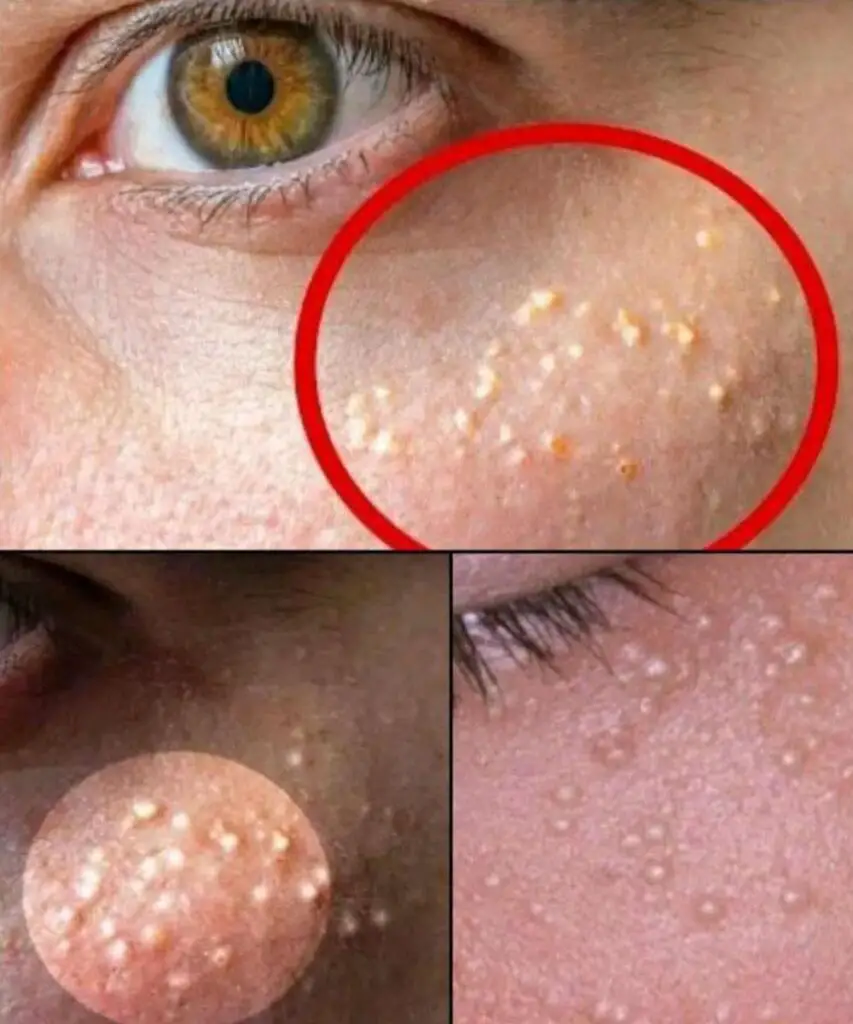
You catch it in the mirror — those tiny white bumps resting beneath your eyes or scattered along your cheeks. They look a bit like whiteheads, yet no cleanser, scrub, or cream seems to make them budge. You can’t squeeze them, and they don’t change much from week to week.
These quiet little bumps are called milia (pronounced mill-EE-uh) — and if you’ve ever felt confused or bothered by them, you’re in very good company. Milia are extremely common, especially as our skin matures. And while completely harmless, they can make us feel a bit less confident about the face that has carried us gracefully through decades of emotion and sunlight and life itself.
But here’s the gentle truth:
Milia are not a mistake. They are simply your skin doing its best, in its own way. And with a little tenderness and understanding, you can support your skin without fear or frustration.
What Milia Actually Are
Milia are tiny, pearl-like cysts — usually no larger than a grain of sand. They form when keratin, the same protein that helps make up your hair, nails, and skin, becomes trapped just beneath the surface.
Think of your skin like a beautiful, ever-renewing tapestry. It naturally sheds old cells every day. But sometimes — because of sun exposure, slower cell turnover, or simply delicate skin — those cells get stuck. Over time, they harden into small, smooth bumps that sit just under the surface.
A few things to remember with kindness:
- Milia are not acne. They don’t contain pus and aren’t inflamed.
- They don’t spread, itch, or hurt.
- They aren’t caused by dirt or poor hygiene.
- They tend to cluster around the eyes and cheeks where skin is thinnest and most sensitive.
Why Milia Become More Common With Age
Milia can appear on anyone — babies, teens, adults — but they show up more often as we get older. Why?
▸ Slower cell turnover
Mature skin doesn’t shed dead cells as efficiently, making it easier for keratin to become trapped.
▸ Sun exposure
Years of UV exposure can thicken the top layer of skin, creating the perfect environment for milia.
▸ Delicate or reactive skin
As we age, our skin becomes more easily irritated by thick creams, strong scrubs, or even friction from towels.
▸ Other possible contributors
Burns, rashes, long-term steroid creams, or simple genetics may also play a role.
Sometimes, milia appear with no clear cause at all — and that’s perfectly normal. Every face has its own unique story.
Where Milia Tend to Appear
Though they can appear almost anywhere, milia most often show up:
- Under the eyes
- Along the upper cheeks
- On the temples or forehead
- Across the nose and chin
- Occasionally on the chest or limbs
For many people, the most noticeable and stubborn milia are the ones near the eye area — right where skin is the most delicate.
Should You Worry? A Reassuring Answer
In the vast majority of cases, milia are entirely harmless. They don’t threaten your skin or overall health, and they certainly don’t mean you’ve done anything wrong.
However, here’s one smart step:
👉 Have a dermatologist or trained provider confirm the diagnosis.
Milia can resemble other skin conditions, such as syringomas, cholesterol deposits, or even early forms of skin cancer. A professional opinion brings clarity and peace of mind.
Seek medical attention if the bumps:
- Change in color
- Become painful or swollen
- Bleed or ooze
- Grow rapidly or appear in dense clusters
What Not to Do — The Most Important Rule
🚫 Do not squeeze, pick, or try to “pop” milia.
This advice is not optional — it’s essential.
The skin around your eyes is exceptionally thin, and attempting a home extraction can lead to:
- Infection
- Dark marks or small scars
- Broken capillaries
- Long-lasting redness
- Damage to the eyelid tissue
Milia feel firm because they’re meant to be that way. Forcing them out causes more harm than help.
Gentle, Natural Ways to Care for Milia at Home
While milia in adults often require professional removal, you can support your skin’s health so that fewer new bumps form — and so existing ones soften over time.
🌿 Cleanse with gentleness
- Choose a fragrance-free, non-foaming cleanser (think Cetaphil or Vanicream).
- Wash using your fingertips only — no washcloths, no scrub brushes.
- Especially avoid rubbing the eye area.
🌿 Exfoliate carefully
- Once a week, place a warm, damp washcloth over closed eyes for a minute.
- This hydrates and loosens the surface layer without irritation.
- Avoid strong acids or scrubs near milia-prone areas — they often worsen the problem.
🌿 Use lightweight moisturizers
- Look for labels that say “non-comedogenic” or “won’t clog pores.”
- Skip heavy eye creams, petrolatum, and thick oils that can trap keratin.
- Hyaluronic acid serums are a beautiful, lightweight alternative.
🌿 Protect your skin from the sun
- Use a mineral sunscreen daily (zinc oxide or titanium dioxide).
- Wear a hat outdoors — your skin will thank you.
When to See a Professional
If milia bother you cosmetically — or if you simply want them gone — a dermatologist can remove them quickly and safely.
Common methods include:
▸ Lancing
A sterile needle creates a tiny opening so the trapped keratin can be lifted out effortlessly.
▸ Electrocautery
A mild electric current helps dissolve stubborn cysts.
▸ Prescription topical retinoids
Used strategically, they increase cell turnover. These must be used with extreme care near the eyes.
Choosing professional help isn’t superficial — it’s self-care.
Your face has carried a lifetime of emotion. It deserves tenderness and expertise.
A Soft Closing Thought
Milia don’t make your skin less beautiful.
They aren’t flaws.
They aren’t imperfections.
They are simply part of the landscape of a life fully lived — tiny reminders of mornings greeted, tears dried, and stories written on the most visible part of who you are.
Some days, you may choose to treat them.
Some days, you may simply let them be.
But every day, you deserve to meet your reflection with compassion.
Because the most meaningful thing about your face isn’t spotless skin.
It’s the life shimmering underneath it.
With warmth, gentleness, and respect for the journey your skin has taken.




Leave a Reply