
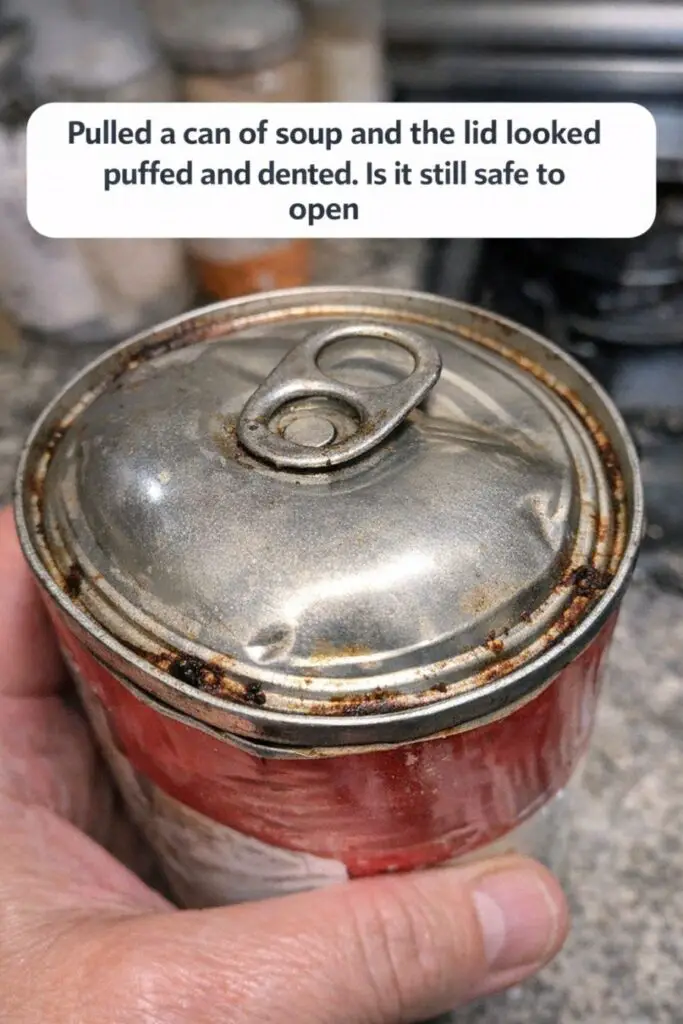
Canned goods are a pantry staple in millions of households. They are affordable, convenient, and designed to last for months — even years — without refrigeration. However, discovering that a can of soup has a puffed lid or noticeable dent can instantly raise concern. You may wonder whether it’s safe to open, safe to eat, or something that should go straight into the trash.
The short answer is this: a puffed lid is a serious red flag, and certain dents can also signal danger. Understanding why this happens — and what to do next — can protect you and your family from foodborne illness.
This comprehensive guide explains what puffing and denting mean, how to assess risk, and how to safely handle questionable canned goods.
Why the Integrity of a Can Matters
Canned food stays safe because of two critical factors:
- Airtight sealing
- Heat sterilization
During the canning process, food is heated to temperatures high enough to destroy harmful bacteria. Then the can is sealed in a vacuum. This vacuum prevents new bacteria from entering and prevents oxygen from fueling microbial growth.
As long as the can remains intact, the contents are generally safe. However, once the seal is compromised — even slightly — bacteria can enter and multiply.
That’s when problems begin.
What a Puffed or Bulging Lid Really Means
A puffed lid (also called a swollen or bulging can) is one of the clearest warning signs of spoilage.
When you see a lid that looks raised, rounded, or tight instead of flat, it usually indicates gas buildup inside the can. Gas production typically occurs because bacteria are actively growing and releasing byproducts.
This is not caused by normal storage. It is almost always a sign that:
- The seal has failed
- Contamination has occurred
- Microbial growth is happening inside
In some cases, pressure may be strong enough to make the can feel firm or even cause it to burst when opened.
If you see a bulging lid, do not open the can. The contents are unsafe.
How Gas Buildup Happens Inside a Can
Gas buildup occurs when microorganisms metabolize nutrients in the food and release gases as waste products. Since canned goods are sealed, these gases have nowhere to escape.
Over time, pressure builds up, causing the lid or bottom of the can to swell outward.
The most dangerous bacteria associated with canned goods is Clostridium botulinum, which produces botulinum toxin. This toxin causes botulism, a rare but life-threatening illness.
Other bacteria can also grow if the seal fails, including:
- Salmonella
- E. coli
- Listeria
Even if the can does not burst, the presence of gas means the contents are no longer sterile.
The Dangers of Botulism
Botulism is particularly concerning because:
- It can occur without noticeable odor.
- The food may look normal.
- The toxin is extremely potent.
Symptoms of botulism can include:
- Double or blurred vision
- Drooping eyelids
- Difficulty swallowing
- Slurred speech
- Muscle weakness
- Paralysis
Symptoms may appear within hours or days after consumption.
Because botulinum toxin can be deadly even in small amounts, you should never take chances with suspicious canned goods.
When Is a Dented Can Dangerous?
Not all dents mean the food is unsafe. However, some types of dents pose real risk.
Generally Safe Dents:
- Small, shallow dents
- Dents on the side of the can
- No swelling, rust, or leaks
If the dent is minor and the can still feels solid and flat on top and bottom, it may still be safe.
Dangerous Dents:
- Deep dents
- Sharp creases
- Dents along seams
- Dents on the lid or bottom
- Any swelling or leaking
The seams of a can are critical because they hold the airtight seal. If a dent compromises the seam, bacteria can enter even if you cannot see a visible hole.
When the seal integrity is in doubt, the safest decision is disposal.
Visual Checks Before Opening a Can
Before opening any canned product, especially one that looks questionable, perform a quick inspection.
Look for:
- Bulging or puffing
- Rust around seams
- Leakage
- Cracks or sharp dents
- Sticky residue
- Foul odor outside the can
If anything looks suspicious, do not open it.
Remember: canned food is inexpensive compared to the potential cost of illness.
What to Check After Opening (If You Opened It)
If you opened a can before noticing the dent or if you are unsure whether it is safe, check carefully.
Warning signs include:
- Spraying liquid upon opening
- Foam or bubbling
- Unusual or sour odor
- Discoloration
- Mold
- Slimy texture
If any of these signs appear, discard the contents immediately.
However, understand that some toxins do not change smell or appearance. That is why swelling is such a serious indicator.
Why You Should Never Taste-Test Suspicious Food
One of the most dangerous mistakes people make is tasting a small amount to “check.”
This is risky because:
- Some bacteria produce toxins without affecting taste.
- Botulinum toxin has no detectable flavor.
- Even tiny amounts can cause severe illness.
Do not taste food from a suspicious can under any circumstances.
How to Dispose of a Swollen or Unsafe Can
Proper disposal helps prevent accidental exposure.
Follow these steps:
- Do not open the can.
- Place it in a sealed plastic bag.
- Dispose of it in an outdoor trash bin.
- Wash your hands thoroughly.
- Clean any surfaces that came into contact with it.
If the can has leaked, use a disinfectant solution to sanitize the area.
Can Temperature Changes Cause Puffing?
Temperature fluctuations can stress a can and weaken its seal over time. However, temperature alone does not usually cause swelling unless spoilage has already begun.
High heat can accelerate bacterial growth if contamination has occurred. That is why canned goods should always be stored in a cool, dry place.
Smart Shopping Habits to Avoid Damaged Cans
Prevention starts at the store.
When buying canned goods:
- Inspect each can carefully.
- Avoid cans with dents, rust, or bulging.
- Choose cans from stable shelves, not clearance bins.
- Avoid cans stored in extreme temperatures.
Rotating stock in your pantry also reduces risk.
Proper Storage at Home
Store canned goods:
- In a cool, dry location
- Away from direct sunlight
- At stable room temperature
- Off damp surfaces
Humidity can cause rust, and rust can weaken seams over time.
Label cans with purchase dates and use older ones first.
When in Doubt, Throw It Out
Food safety experts consistently advise: if you are unsure, discard it.
Canned soup is inexpensive and easily replaceable. Your health is not.
The potential consequences of consuming contaminated food far outweigh the small cost of replacement.
Final Verdict
If the lid of your can is puffed or bulging:
Do not open it.
Do not taste it.
Dispose of it safely.
If the can is deeply dented or damaged along the seam:
Discard it.
If the dent is small and superficial with no swelling or leakage:
It may still be safe — but inspect carefully.
Canned goods are normally extremely safe when intact. However, once structural integrity is compromised, the risk increases significantly.
When it comes to food safety, caution is always the wisest choice.



Leave a Reply